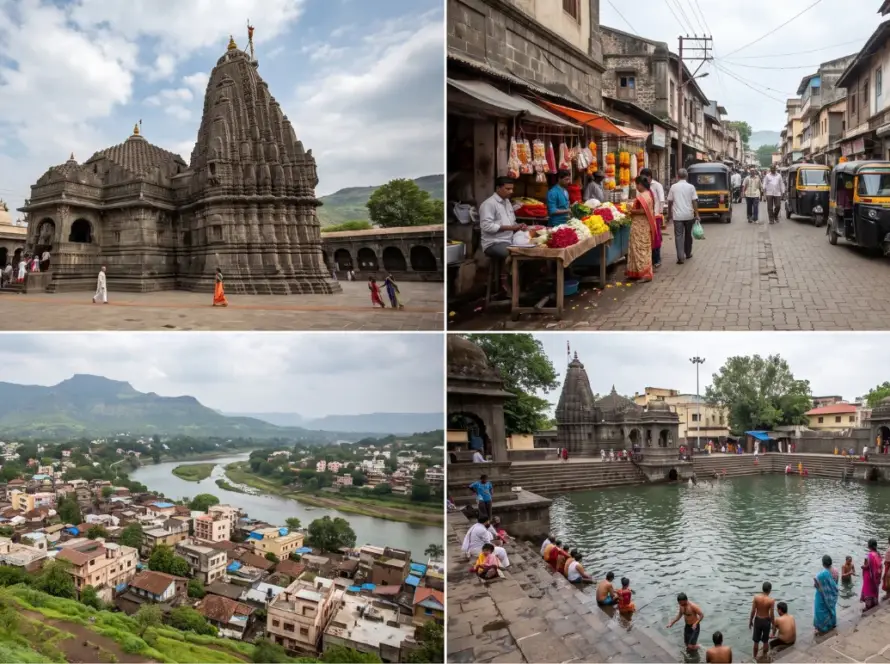
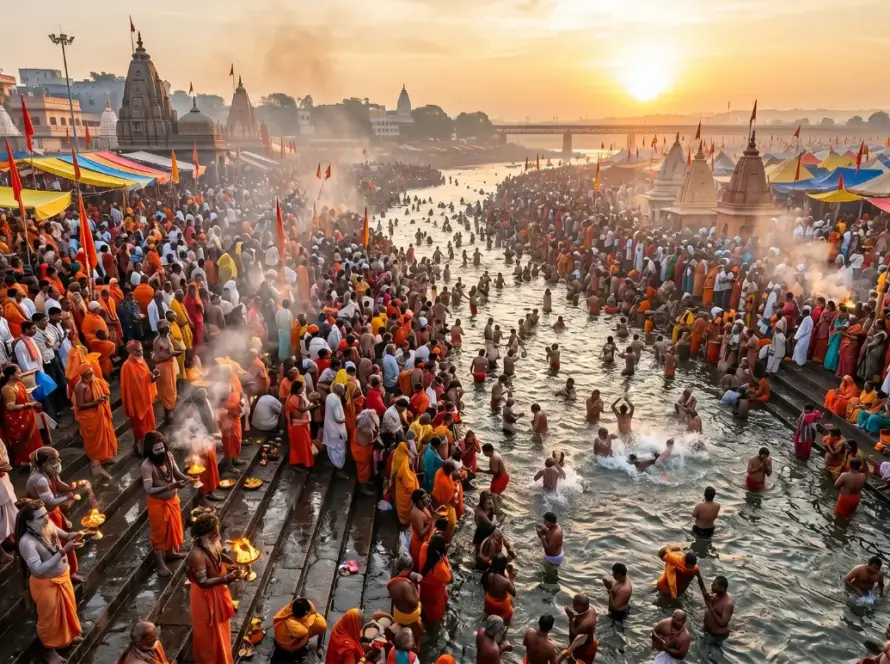
Ramkund Nashik is one of the most sacred bathing ghats in all of India, a living spiritual landmark on the banks of the Godavari River where faith, history and ritual come together every single day. Whether you are a devotee seeking a holy dip, a pilgrim performing ancestral rites, or a traveller drawn to the quiet power of Panchavati, Ramkund is the beating heart of Nashik’s spiritual identity. With the Nashik Kumbh Mela 2027 approaching, interest in the Godavari Ghat and its sacred waters has never been higher.
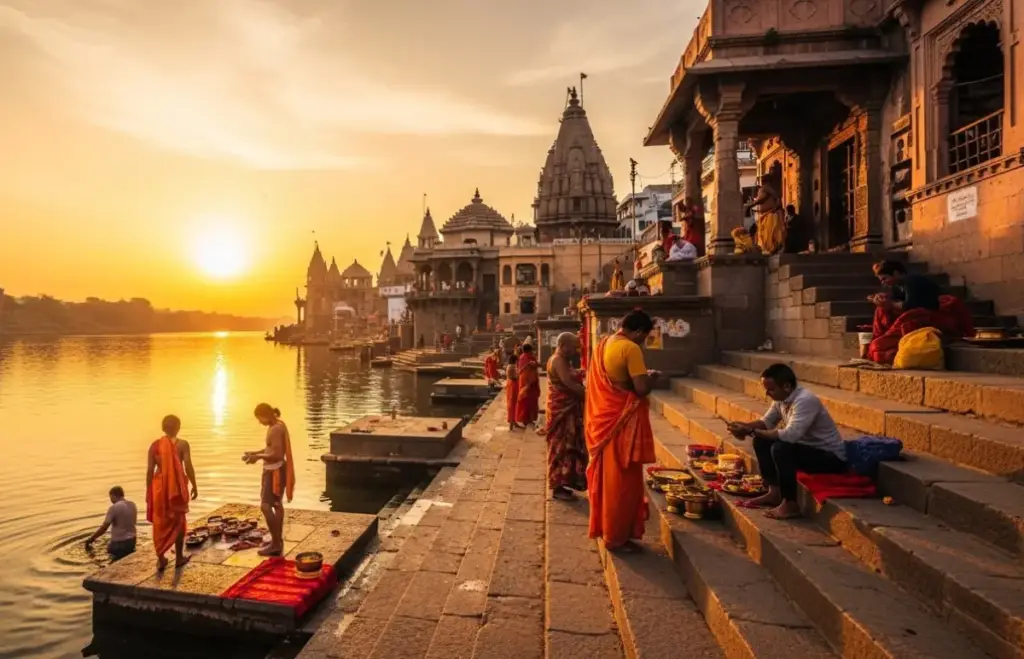
Situated on the bank of the divine Godavari River in Maharashtra, Nashik is widely considered the backbone of Indian spirituality. As Nashik has a connection with the Godavari, it is regarded as one of the central pilgrimage destinations for Hindus. In the heart of this city, you will find a holy pond known as Ramkund, which holds immense importance at the Nashik Kumbh Mela. As many devotees are gearing up to attend the Nashik Kumbh Mela in 2026-27, this guide will explain all about Godavari and Ramkund, prominent celebrations in Nashik, Nashik Kumbh Mela timings, arrangements and some tips to enhance your experience.
Ramkund Nashik — Quick Facts at a Glance
- Location: Panchavati area, Nashik (2 km from Nashik Central Bus Stand)
- Built: 1696 AD by Chitrarao Khatarkar. Later restored by Gopikabai, mother of Peshwa Madhavrao IV
- Size: 27 x 12 sq. metres
- Open: 24 hours, all days
- Best time for holy dip (Brahmamuhurta): 4 AM to 6 AM
- Godavari Aarti timing: 6:30 PM to 7:00 PM (daily)
- Temples visiting hours: 5 AM to 9 PM (with afternoon break)
- Also known as: Asthi Vilaya Tirtha (Bone Immersion Tank)
- Famous for: Holy dip, Asthi Visarjan (ash immersion), Kumbh Mela, Godavari Aarti
- Nearest railway station: Nashik Road (10 km away)
- Nearest airport: Nashik Ojhar International Airport (24 km away)
Sacred Soul of Nashik: The History and Significance of Ramkund
Ramkund is one of the ghats that is located on the banks of the river Godavari. Historically, Ramkund is associated with the Ramayana. It is said to be the holy pond where Lord Rama bathed during his 14-year exile and performed his father’s Asthi Visarjan after his death. From then on, it became a tradition to bring the ashes of deceased loved ones here to do the last rites so that their souls find eternal peace.
Ramkund as well as Godavari both provide numerous benefits to devotees. It is said that by taking a holy dip, devotees can cleanse their souls, while the vibration of the evening Ganga Aarti provides calmness to the mind. Devotees visit the temples to receive the blessings for their families and close ones and boost their health and prosperity.
The sacred waters of Ramkund have also witnessed a profound chapter in modern Indian history. The ashes of some of India’s most revered leaders — including Mahatma Gandhi, Pandit Jawaharlal Nehru, Indira Gandhi and Y.B. Chavan — were immersed here. This further deepens the reverence this ghat commands, not just among pilgrims but across the nation.
Godavari Ghat Nashik — What Makes It Different from Other Ghats in India
The Godavari Ghat in Nashik, locally known as Goda Ghat, it is not just a single bathing point. It is a stretch of sacred steps along the Godavari River in the Panchavati area, spanning nearly one kilometre. The main ghats include Ramkund, Lakshman Kund, and the broader Ganga Ghat area. Together, they form the spiritual core of Nashik.
What makes Godavari Ghat in Nashik unique is the fact that the Godavari River here is treated with the same reverence as the Ganges in Varanasi. Locally, devotees call the Godavari ‘Dakshin Ganga’ (the Ganga of the South). Every evening, the Godavari Nitya Aarti transforms the ghat into a mesmerising sea of lamps and chants that is genuinely unlike anything else in Maharashtra. During the Nashik Kumbh Mela, the entire stretch of Godavari Ghat becomes the venue for Shahi Snan, the royal bathing procession of Naga Sadhus and Akharas.
Godavari Aarti at Ramkund Nashik — Timings and What to Expect
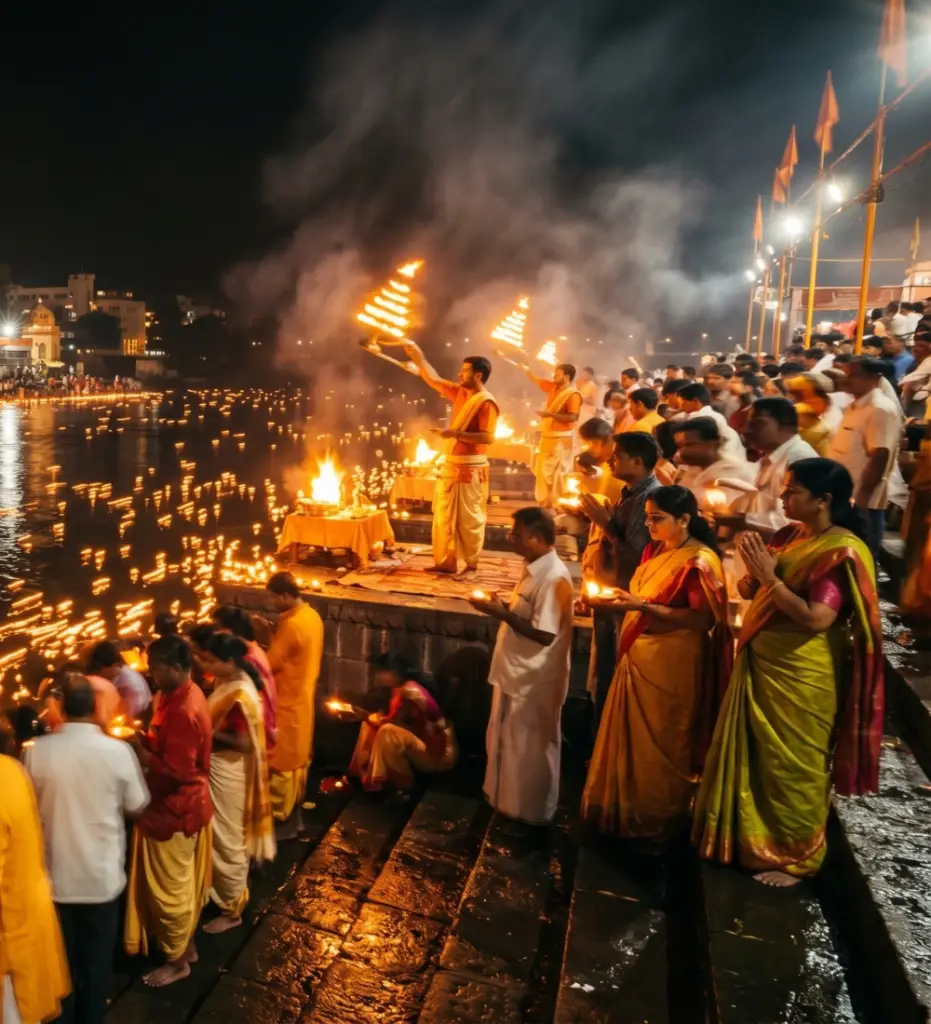
The Godavari Aarti, which is also called Goda Aarti is performed every evening at the Ramkund ghat between 6:30 PM and 7:00 PM. This is not a staged tourist performance. It is a deeply authentic daily ritual where priests hold large oil lamps and chant Vedic hymns while devotees gather on the steps of the ghat.
As the sun sets and the lamps are lit, devotees release diyas onto the river. Watching hundreds of these tiny flames drift downstream in the dark is one of the most quietly powerful experiences you can have in Nashik. The fragrance of incense, the sound of bells and the rhythmic chanting create an atmosphere that stays with you long after you leave.
Practical tip for Aarti visitors: Reach the ghat by 6:00 PM to find a good spot. The area fills up quickly, especially on weekends and festival days. Do not block the steps or crowd the priests. Simply find a quiet spot, observe, and absorb.
Prominent Temples and Places Around Ramkund to Visit During the Nashik Kumbh Mela
Different temples are nestled around Ramkund, and it is said that a visit to Ramkund is incomplete without visiting these temples. The different divine spots form Panchavati. The most prominent temples that you can visit during your stay in Nashik are the following:
1. Kalaram Temple
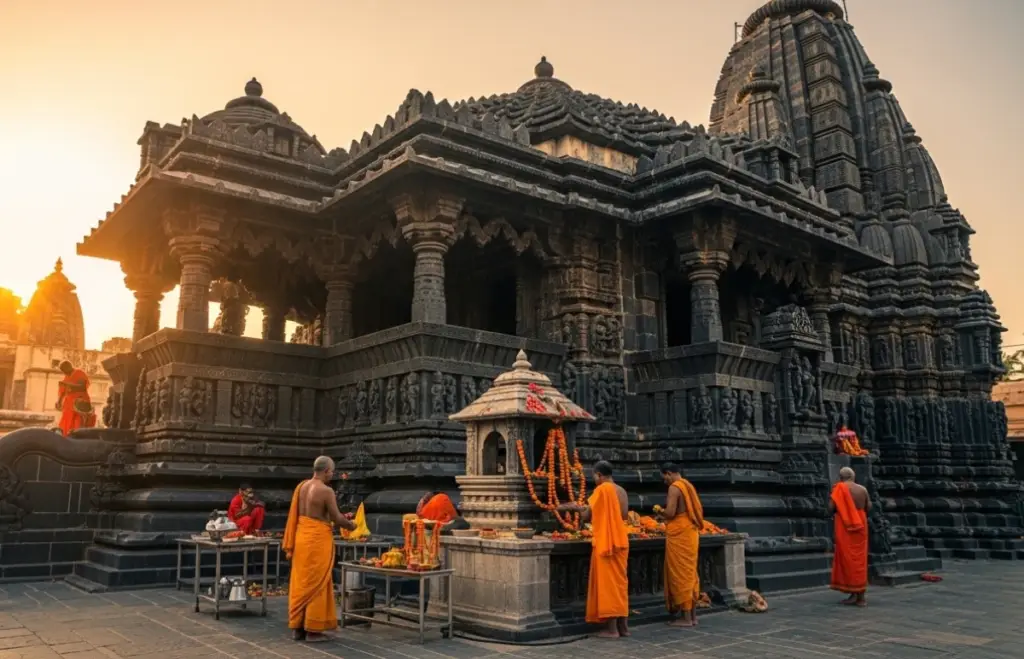
The Kalaram temple was constructed in the 18th century and was entirely built using the magnificent black stone. This temple is prominently dedicated to Lord Rama. According to the Ramayana, this is the place where Sita stayed before she was kidnapped by Ravan and taken to Lanka. This temple has a cave known as Sita Gufa (Sita’s Cave).
2. Saptashrungi Temple
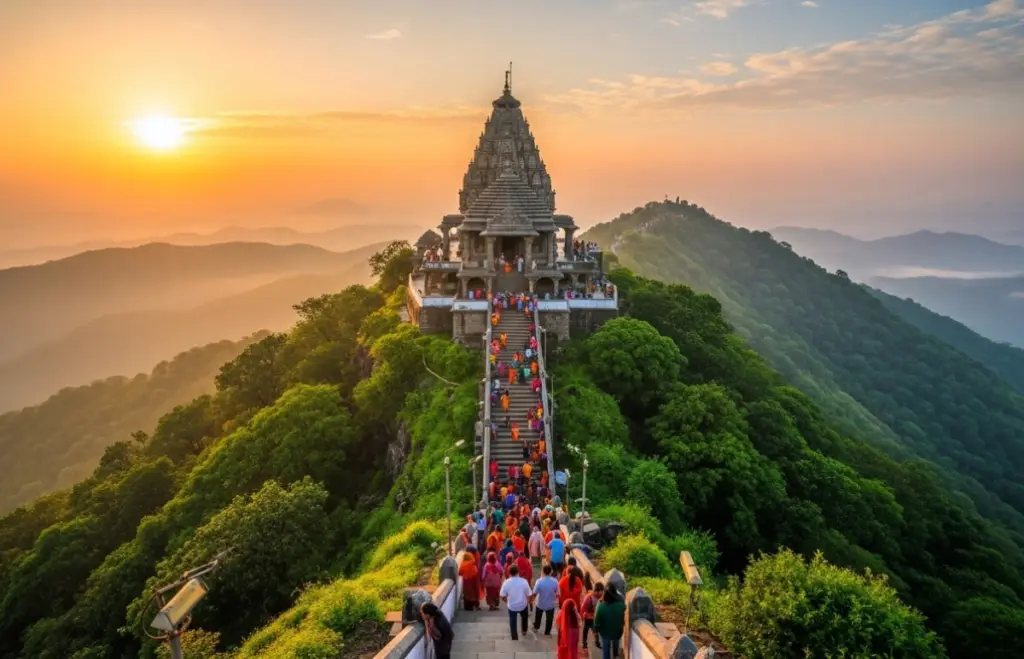
The Saptashrungi Temple is dedicated to the goddess Durga and is among the 51 Shakti peethas. It is located on a hill, approximately 60 kms away from Nashik, so devotees can only visit there through trekking.
3. Trimbakeshwar Temple
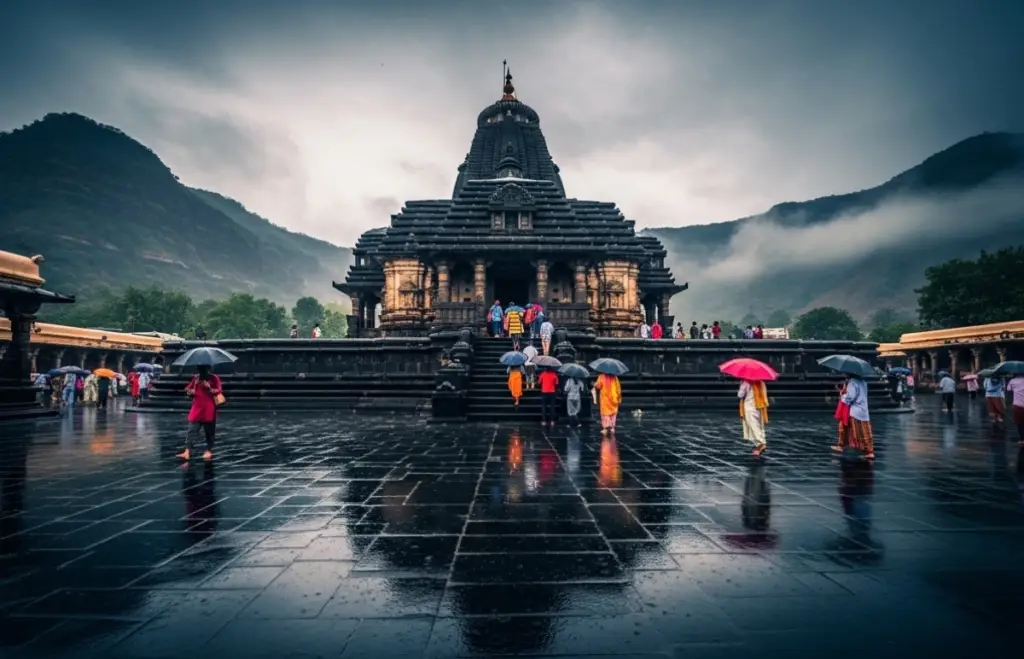
Trimbakeshwar Temple is dedicated to Lord Shiva and is among the 12 Jyotirlingas of Bholenath. This temple is the origin place of Godavari and holds great significance in Nashik. It features a three-faced lingam, representing Brahma, Vishnu, and Mahesh.
4. Kapaleshwar Temple
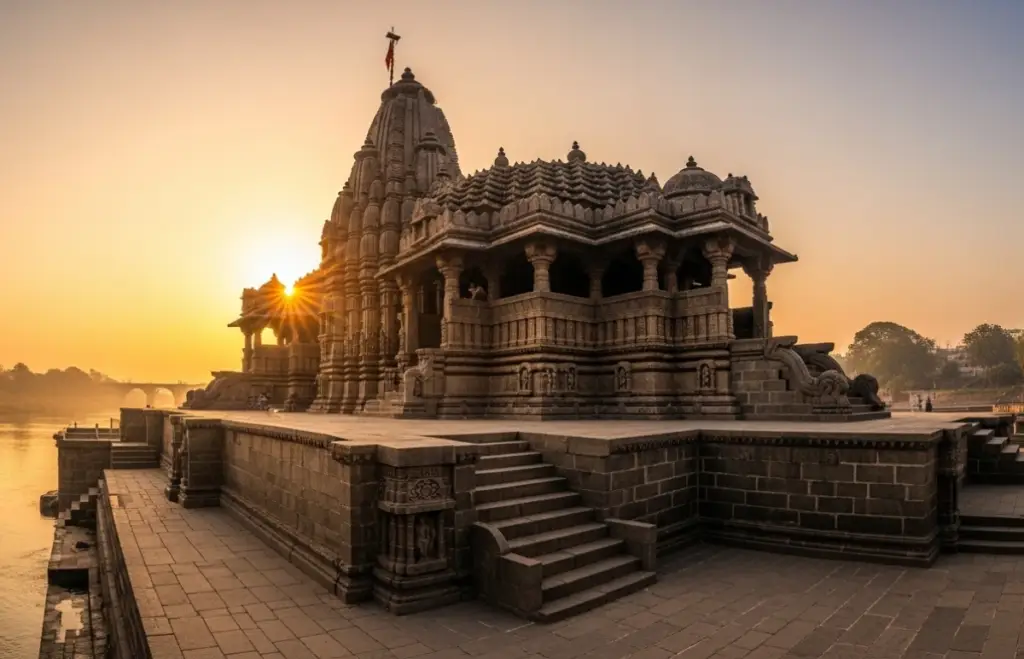
Kapaleshwar Temple is dedicated to Lord Shiva, and it is the only prominent temple of Bholenath without Nandi (the bull). It is believed that devotees can free themselves from ancestral karmic debt by seeking blessings here.
5. Sita Gufa (Sita’s Cave)
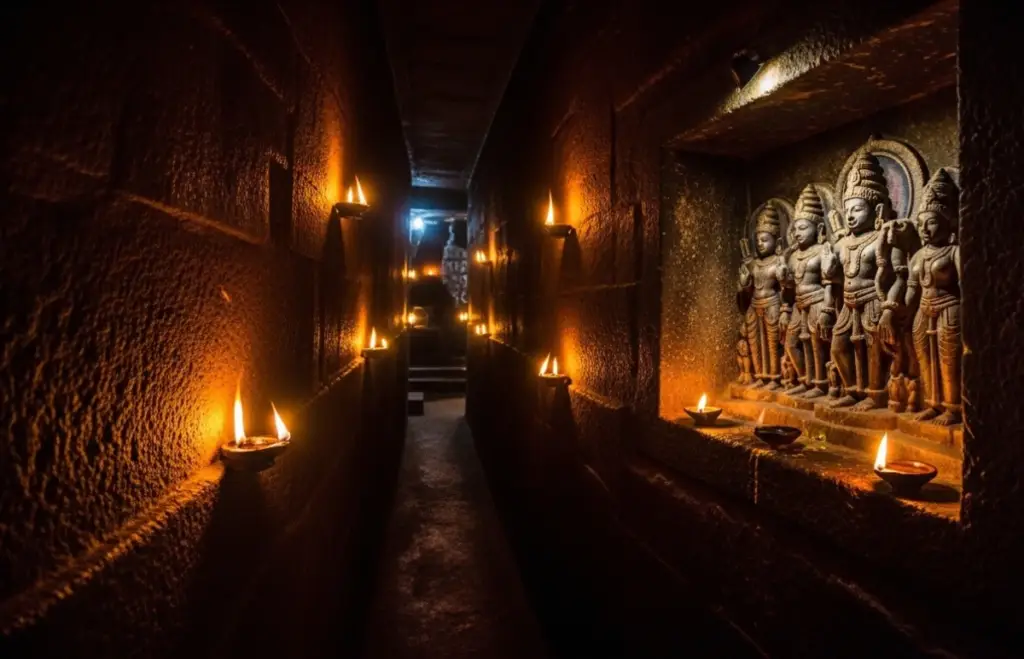
Located within walking distance of Kalaram Temple, Sita Gufa is a natural cave believed to be the place where Sita was sheltered during the exile period. It is a small but deeply revered spot and takes about 15 minutes to explore. Reach by 8 AM to avoid the afternoon crowd.
6. Lakshman Kund
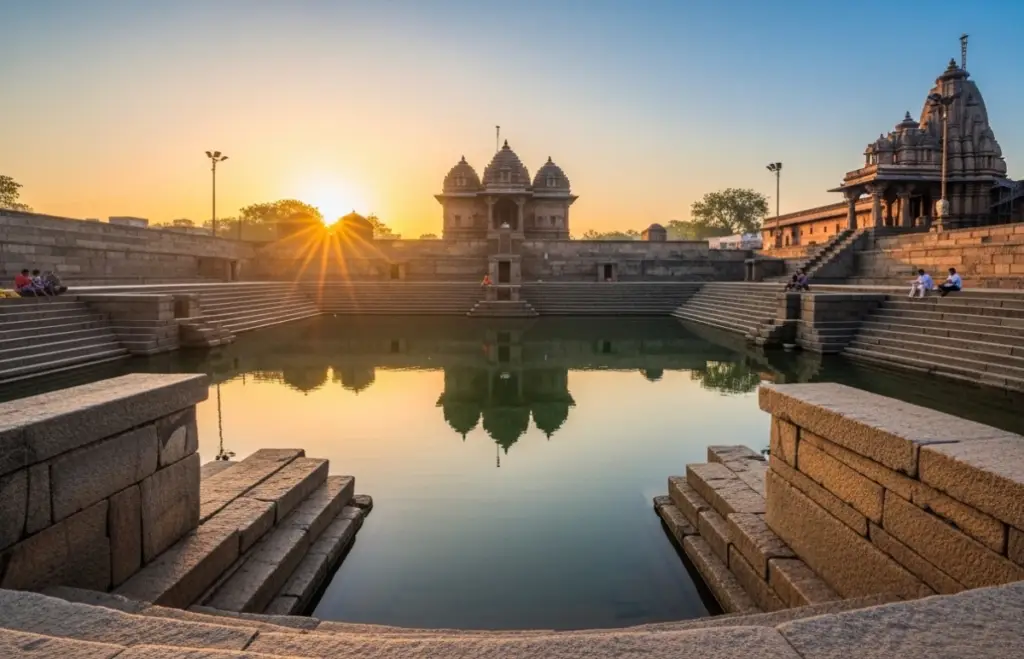
Adjacent to Ramkund lies Lakshman Kund — a smaller but equally sacred bathing tank associated with Lord Lakshmana. Many devotees take a dip in both during their visit. During Kumbh Mela, Lakshman Kund also witnesses significant ritual activity.
Arrangements at Ramkund and Godavari Ghat During Nashik Kumbh Mela 2027
Ramkund is one of the prominent ghats of the river Godavari. The reason behind its prominence is Lord Rama, who spent his time during exile here. The Nashik Kumbh Mela is a proud moment for devotees as they have the opportunity to participate in the world’s largest congregation. During the Nashik Kumbh, a large area is lit up with diyas and oil lamps, and the air gets filled with the fragrance of sandalwood and dhoop. For the devotees, temporary platforms are built where they can perform rituals.
The Nashik Kumbh Mela is a historic event where the fusion of ancient Vedic tradition and modern technology will be seen, giving pilgrims a mesmerising view. It is the place where people find tranquillity from their stressful lives and embark on their journey to self-discovery. In 2027, proper arrangements and management will be made to control congestion until investments are made in medical support for a smooth flow of Kumbh Mela 2027.
Confirmed Shahi Snan dates at Ramkund and Godavari Ghat for Nashik Kumbh Mela 2027.
Spiritual Celebrations and Activities Renowned in Nashik
Nashik is known for its religious and cultural traditions, as well as its spiritual festivals, rooted in its rich history. Nashik is not only eminent for its reverence but also known for visiting diverse places. Not many know that Nashik is also regarded as the Wine Capital of India. Along with enjoying a spiritual journey, devotees can also visit vineyards and wineries to gather knowledge about the variety of wines and the process of making wine. Devotees can also analyse the Buddhist heritage by visiting Pandev Leni Cave.
Moreover, nature lovers can also visit the Dudhsagar Falls (also known as Someshwar Fall) with their families, especially during the monsoon. They can click beautiful photographs and enjoy the beauty of nature. The spiritual celebrations that attract tourists to Nashik include:
1. The Kumbh Mela
Kumbh Mela is the most prominent festival, which is celebrated every 12 years. In this mela, sadhus and millions of devotees gather to take a holy dip in the Godavari at Ramkund and Trimbakeshwar. The upcoming Kumbh Mela is scheduled for 2027.
2. Ram Navami
As Nashik is the place that is also known as Panchavati, where lord Ram lived. So, it is celebrated with full enthusiasm. People celebrate it by organising different Rath yatras, followed by the famous Nashik Dhol.
3. Gudi Padwa
Gudi Padwa is the Marathi New Year. It is celebrated with cultural richness, including Shobha Yatra, in which streets are decorated, and dhol rallies are organised. You will also witness Maha Rangoli, which represents different local art.
Timing and Traditions of Ramkund Nashik — Daily Ritual Schedule
Due to the pleasant weather, it is best to visit Nashik between the months of October and March to explore various places, from temples to ghats. To completely enjoy the real Nashik experience, it is important to know the daily cycles of the ghat. The time from 4 AM to 6 AM is known as Brahmamuhurta, which is perfect for taking the holy dip. During this time, the atmosphere is surrounded by the chanting of Vedic mantras. Ganga Aarti is performed after the sun sets, from 6:30 PM to 7 PM, an enchanting experience for the devotees. Moreover, the devotees can visit temples encircling Ramkund from 5 AM to 9 PM, along with a short break in the afternoon.
Dress Code and Etiquette at Ramkund Nashik
Ramkund does not have a strict enforced dress code, but modest and respectful attire is expected as this is an active place of worship visited daily by thousands of devotees.
- Men: Dhoti or pajama with upper garment, or trousers and shirt. Avoid shorts.
- Women: Saree, half saree, or salwar suit. Avoid sleeveless tops, mini-skirts and revealing clothing.
- Non-Hindus: Welcome to visit the ghats and general areas. May be restricted from entering inner sanctums or performing certain rituals.
- Photography: Always take permission before photographing Sadhus. Be respectful during rituals and Aarti.
Tips for Visiting Ramkund During Nashik Kumbh Mela 2027
Devotees should visit the mela during the early morning hours to avoid congestion and avoid peak hours, especially when travelling with elderly people or children. You should wear comfortable clothes so that it is easy for you to move in the crowd. Stay hydrated and stay with your families, especially in crowded areas. Additionally, fix a meeting point in case you get separated from your group. Follow the instructions of the police and volunteers, and keep valuables and cash secure. Download the official Kumbh 2027 mobile app to watch the crowd heat map. Before clicking photographs, take permission from the Sadhus and follow the protocols set by the authorities.
Where to Stay During Nashik Kumbh Mela
You will find multiple hotels near Nashik Kumbh Mela, but accommodation can fill up quickly during the Kumbh. So, to avoid last-minute hassles, it is best to book your stay at least 1–2 months in advance. Among the many accommodation options in Nashik, some of the most affordable ones are:
- Temporary tent cities (set up during Kumbh)
- Budget hotels near Panchavati
- Dharamshalas for pilgrims
- Ashrams and guesthouses
Final Words: A Journey of Serene Retreat
Nashik is the city which reminds us of spirituality, as it is like the entrance to the divine. Godavari and Ramkund are widely visited by devotees to seek blessings and forgiveness for their own mistakes. It is the destination where devotees perform different divine rituals for their ancestors. Nashik is not only prominent for its spirituality but also for nature, history, and divine temples. As this place has a connection to Lord Rama’s life, it creates a spiritual atmosphere. Nashik makes devotees feel calm and delighted. So, are you planning to visit the Nashik Kumbh Mela 2027?
Frequently Asked Questions (FAQs)
Panchavati ghats and prominent temples near Ramkund are ideal to visit with families, as they are accessible and well-managed. You can also perform the Godavari Aarti in Nashik.
No, Ganga Poojan can be performed throughout the year at Nashik. However, performing it during the Nashik Kumbh Mela is considered far more auspicious.
Yes, you can have a combined itinerary, including Ganga Poojan at Ramkund or a visit to Panchavati and Trimbakeshwar Jyotirlinga, one of the 12 sacred Jyotirlingas of Lord Shiva.
Ramkund is open 24 hours every day of the week. The best time for a holy dip is between 4 AM and 6 AM (Brahmamuhurta). The Godavari Aarti is held daily from 6:30 PM to 7:00 PM. Temples around Ramkund are generally open from 5 AM to 9 PM with a short afternoon break.
Asthi Visarjan — the immersion of the ashes of a deceased person — is one of the most important rituals performed at Ramkund. It is believed that immersing the ashes in the sacred waters of the Godavari here grants moksha (liberation) to the departed soul. This practice dates back to the time of Lord Rama himself, who is said to have performed his father Dasharatha’s last rites at this very spot.
The Godavari Aarti (Goda Aarti or Godavari Nitya Aarti) takes place every evening from 6:30 PM to 7:00 PM at the Ramkund ghat on the banks of the Godavari River in Panchavati, Nashik. It is held 365 days a year. Arrive by 6:00 PM to find a good viewing spot.