

Here is everything you need to know about its grandeur and significance of Akharas and Rituals
Nashik Kumbh Mela is anticipated to be one of the largest spiritual gatherings of humanity the world has ever witnessed. In 2027, when the chants echo along the Godavari and millions come together with faith in their hearts, Nashik will once again transform into a spiritual cosmos. If there’s one event every Hindu must witness at least once, it is the Kumbh Mela. As Nashik prepares to host the Kumbh Mela in 2027, arrangements are being made with great enthusiasm. So, we have curated a complete guide for you, shedding light on the various Akharas participating in the Kumbh Mela and the Akhara rituals at Kumbh Mela.
What is Akhara in Kumbh?
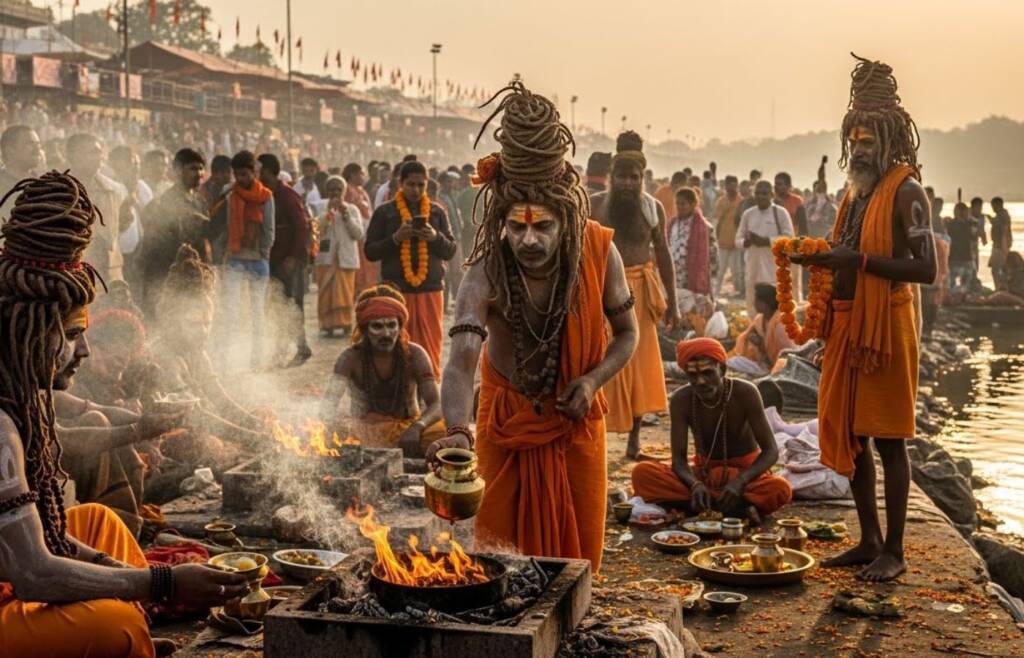
Akharas are the places of worship for Sadhus and Naga Sadhus at the time of Nashik Kumbh Mela. They are the backbone of the Kumbh Mela and are a kind of camps that are organised for Sadhus and Naga Sadhus, each having their own flags and emblems. The Sadhus stay here to perform their rituals and prayers. They are the centre of the most important ceremonies that take place in the Nashik Kumbh Mela and all the spiritual experiences that attract millions of pilgrims who seek spiritual liberty and blessings.
The rituals at the Nashik Kumbh Mela commence after the grand Peshwai processions of all the Sadhus and Naga Sadhus. These saints are heard chanting “Har Har Mahadev” while heading towards the ghats of the Godavari River for Shahi Snan. Trishuls are a major part of this procession.
List of Akharas in India
In India, several Akharas have taken up the responsibility of uplifting the Sanatan Dharma and preserving its rituals. Each akhara is a small world in itself; they have their own values and their own hierarchy that is unique to their own. The akharas participating in the Nashik Kumbh Mela 2027 are categorised into the following parts:
The Shaivite Akharas are the followers of Lord Shiva and are the most prominent and largest group at the Nashik Kumbh. The members of these Akharas are renunciates of the people who have performed their own death rites, freeing themselves from all the materialistic attachments of the world. Some of the primary Shaivite Akharas that you’ll see at Nashik Kumbh Mela are:
- Shri Panch Dashnaam Juna Akhara (the oldest and largest)
- Shri Panch Naam Avahan Akhara
- Shri Panchayati Akhada Mahanirvani
- Shri Panch Agni Akhara
- Shri Niranjani Akhada
- Shri Panchayati Atal Akhada
- Shri Taponidhi Anand Akhada Panchayati
The practices of Vaishnava Akharas are filled with devotion, songs, and a feeling to surrender to the supreme God. They are the followers of Lord Vishnu and his other Avatars. They have their primary bathing site at Ramkund in Nashik, which was a primary bathing place for Lord Ram during his exile. Collectively known as Vairagi Ani, these Akharas include:
- Shri Digambar Ani Akhara
- Shri Nirvani Ani Akhara
- Shri Nirmohi Ani Akhara
Baba Sri Chand, the elder son of Guru Nanak, founded the Udasin tradition. Their followers represent a mixture of principles of Hinduism and Sikhism. They have their own man order of:
- Shri Panchayati Akhada Bada Udasin
- Shri Panchayati Akhada Naya Udasin
- Shri Panchayati Akhada Nirmal
Akhara Rituals at Kumbh Mela
Rituals that are performed by devotees of the akharas form the backbone of the Kumbh Mela. Without these rituals, Kumbh would lose all its meaning. These rituals connect millions of pilgrims. The devotees of these Akharas perform a number of rituals and practices that are crucial in Hinduism. The most common Akhara rituals at Kumbh Mela include:
Peshwai
Peshwai Procession is the most magnificent sight of the Kumbh Mela. It is the grand entry of Akharas into the Kumbh. The Sadhus march in an organised manner, and their order is based on ancient precedence that is followed even today. Naga Sadhus lead this procession as they’re known to be the most pure and spiritual.
Shahi Snan
Shahi Snan is the most spiritually important ritual that is performed at the Kumbh Mela. It is the royal snan done by Sadhus and Naga Sadhus, and then the pilgrims. It is done to clear out the mind and body from all our sins and be bestowed with punya.
Brahma Muhurat Rituals
Brahma Muhurat is the time between 3:30 AM to 5:30 AM, the time when God wakes up, and the ghats of the Kumbh come to life with silent devotion. This is considered the most satvik time of the day. The devotees start their day with Snan, the early morning dip in water. It is followed by Gayatri Mantra chanting, meditation and pranayam. Lastly, the devotees perform Surya Arghya, the practice of offering water to the sun.
Yagna and Hawan
This ritual invokes Agni, the God of fire. Ghee, grains, and herbs that represent the surrender of ego and negativity are offered to the God of fire. The rituals of Yagna and Hawan mainly focus on protection from negativity, seeking ancestral blessings, gaining worldly peace, maintaining environmental harmony, and promoting aura cleansing.
Deep Daan
Deep Daan is a very beautiful ritual performed during the Kumbh Mela. In this ritual, a small oil lamp is lit and set to float in the river. This is performed during the time of sunrise or sunset. During this ritual, the entire river is lit up by a number of lamps, making the river look divine.
The significance of Naga Sadhus at Nashik Kumbh Mela Shahi Snan 2027
Naga Sadhus are ascetic Shaivite monks who are often recognised as the saviours of faith. They are a very important part of the Shahi Snan. They are identified by their naked bodies smeared with ashes and long matted hair. They are popular for their severe austerities and following of celibacy. The Naga Sadhus live in seclusion in caves and forests and only step out during Kumbh Mela to participate in the Shahi Snan to perform traditions linked to Lord Shiva and protect Sanatan Dharma.
These Sadhus leave worldly desires and fascinations behind and unstring themselves from worldly ties and materialistic desires. They devote themselves to prayer and practice intense meditation and worship Lord Shiva. The sight of taking a dip by Naga Sadhus into the river and the daily rituals of Naga Sadhus give goosebumps to the spectators who attend the Kumbh Mela. The strength, commitment, and intense faith of Naga Sadhus inspire everyone with awe and reverence.
The Akhara rituals at Kumbh Mela are the rituals that are performed by all the Sadhus, Naga Sadhus, and the general public. It is believed that these rituals help cleanse the body, soul, and mind of the individual. They also help remove negativity from around us. So, if you are somebody eager to witness these magnificent proceedings at Kumbh Mela, start planning your trip to Nashik and participate in the Kumbh Mela 2027 to feel the magic.
Frequently Asked Questions (FAQs) related to Akhara Rituals at Kumbh Nashik
1. Who are the Naga Sadhus in the Akhara in Kumbh Mela?
Naga Sadhus are the holy men from different Akharas who withdraw themselves from worldly attachments, abode in the Himalayas and spend their lives in meditation and following a higher level of worshipping the divine power.
2. How many Akharas participate in the Nashik Kumbh Mela?
Several major Akharas participate in the Nashik Kumbh Mela, including the likes of Shaiva, Vaishnava, and Udasin Akharas. However, the Shaiva Akharas play the dominant role.
3. Can tourists and International travellers visit Akhara camps at the Nashik Kumbh Mela?
Yes, most Akhara camps at the Nashik Kumbh Mela are open to visitors and International travellers, except for restricted initiation zones.
4. Which Akhara takes the first dip during the Shahi Snan at Nashik Kumbh Mela?
During the holy dip, the Akharas get the first right to bathe during Shahi Snan. They are given a designated time slot according to their standing. The Naga Akhara is usually the first to take the dip.
5. Are women allowed to visit the Akhara areas at the Nashik Kumbh Mela?
Yes, women devotees are welcome to visit the public areas of Akhara camps. They can even witness the grand Peshwai processions carried out by the Akharas at Kumbh Mela.